Magazine Issue ›› October 2008
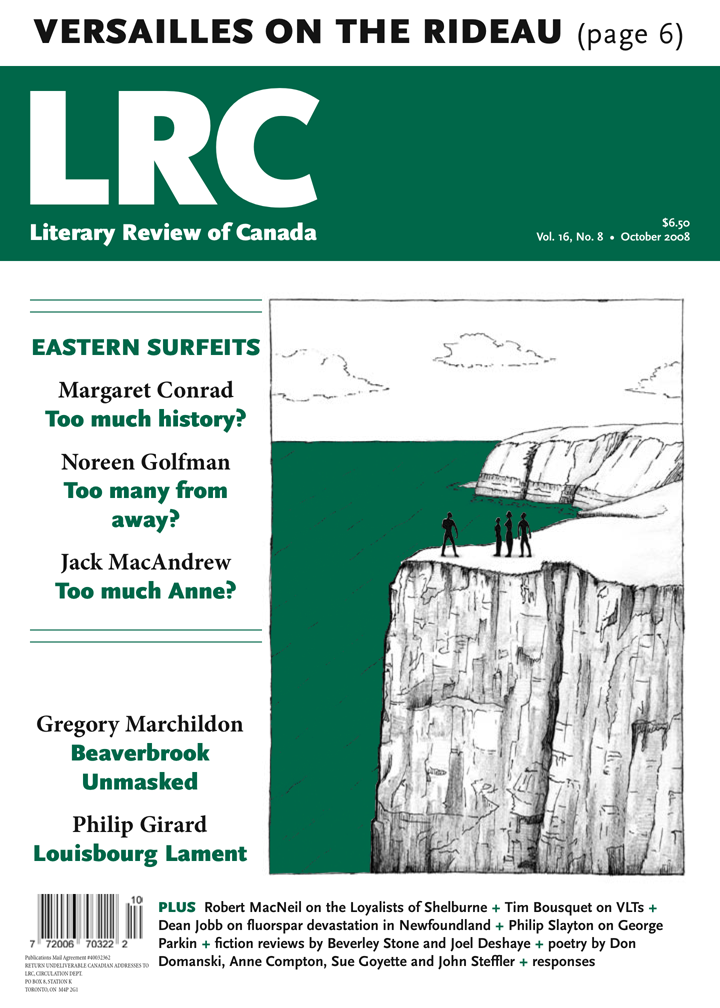
In the October 2008 Issue
-
History Does Matter
The future of the past in Atlantic Canada.
-
Control-Freak Kingdom
A review of Donald J. Savoie's Court Government and the Collapse of Accountability in Canada and the United Kingdom
-
Rich Man, Poor Man, Beggar Man, Thief
A review of Jacques Poitras' Beaverbrook: A Shattered Legacy and David Adams Richards' Lord Beaverbrook
-
An Outsider's Eye
Newfoundland culture as defined from without and within.
-
The Year of Anne
A review of Budge Wilson’s Before Green Gables, Deidre Kessler’s Anne of Green Gables: Stories for Young Readers, Don Harron’s Anne of Green Gables, The Musical: 101 Things You Didn’t Know, Elizabeth Rollins Epperly’s Imagining Anne: The Island Scrapbooks of L.M. Montgomery, Irene Gammel’s Looking for Anne: How Lucy Maud Montgomery Dreamed Up a Literary Classic and Elizabeth Waterston’s Magic Island: The Fictions of L.M. Montgomery
An Impossible Dream
A review of Loyalists and Layabouts: The Rapid Rise and Faster Fall of Shelburne, Nova Scotia, 1783–1792, by Stephen Kimber
Slow-Motion Disaster
A review of The Dirt: Industrial Disease and Conflict at St. Lawrence, Newfoundland, by Rick Rennie
Avian Games
A review of The Darren Effect, by Libby Creelman
George Parkin
A review of Parkin: Canada’s Most Famous Forgotten Man, by William Christian
Casting a Light on Whiteness
A review of Mark Anthony Jarman’s My White Planet
The Crack Cocaine of Gambling
A review of Terminal Damage: The Politics of VLTs in Atlantic Canada, by Peter McKenna
Cape Breton Ghost
A review of A.J.B. Johnston’s Endgame 1758: The Promise, the Glory and the Despair of Louisbourg’s Last Decade
Ursa Immaculate
A poem
Even now
A poem
Introducing the Tree: A Lather of Green
A poem
Beating the Bounds
A poem
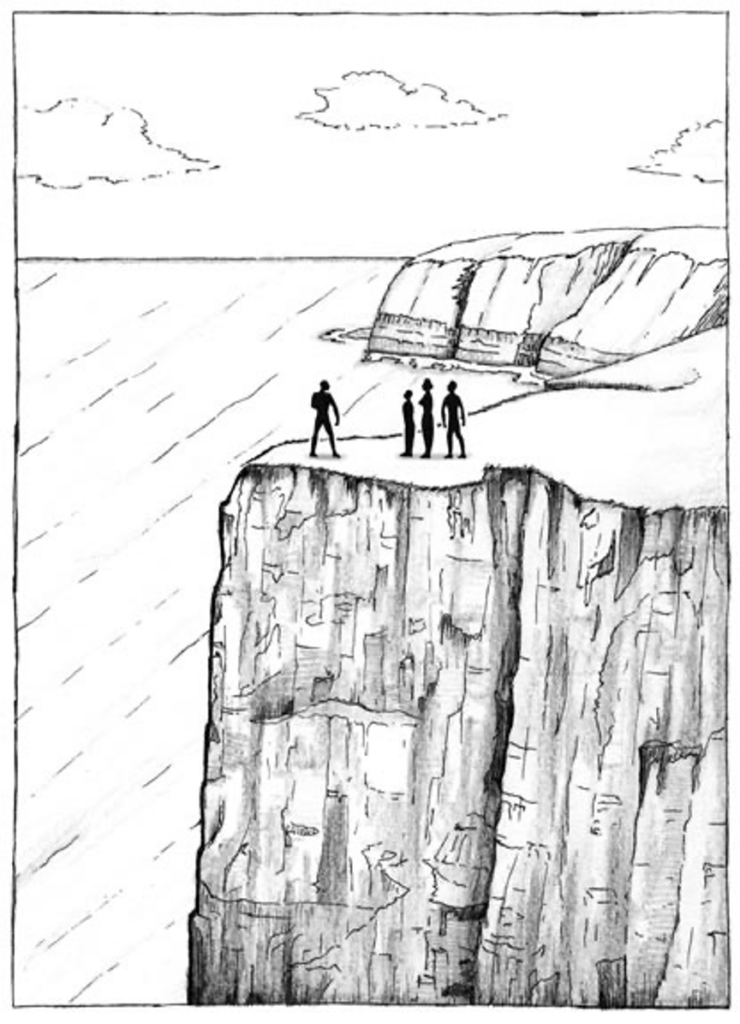
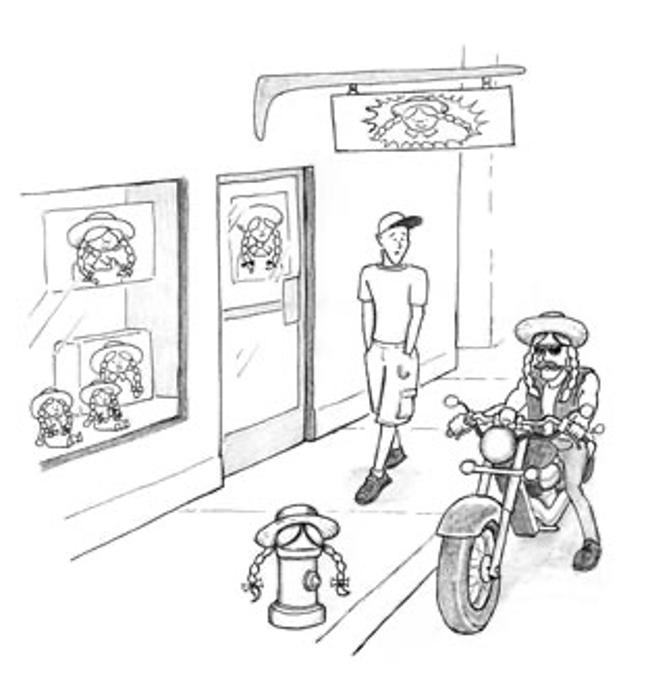
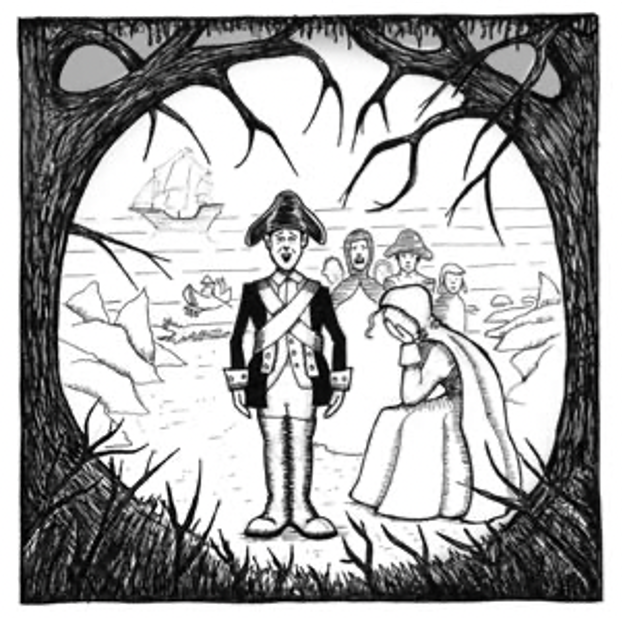
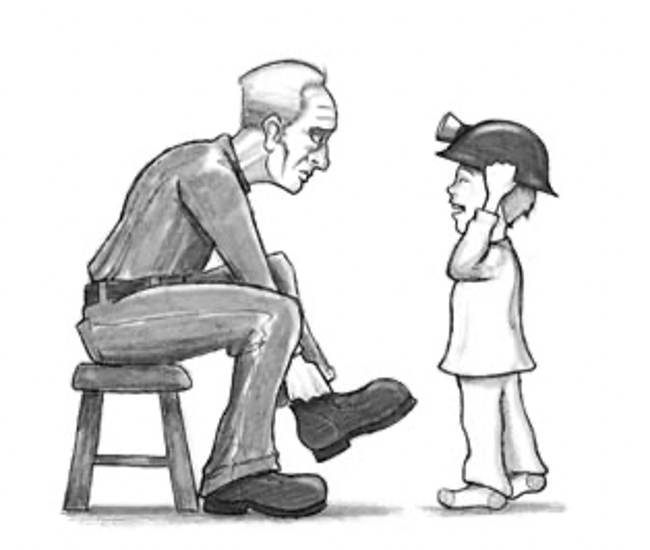
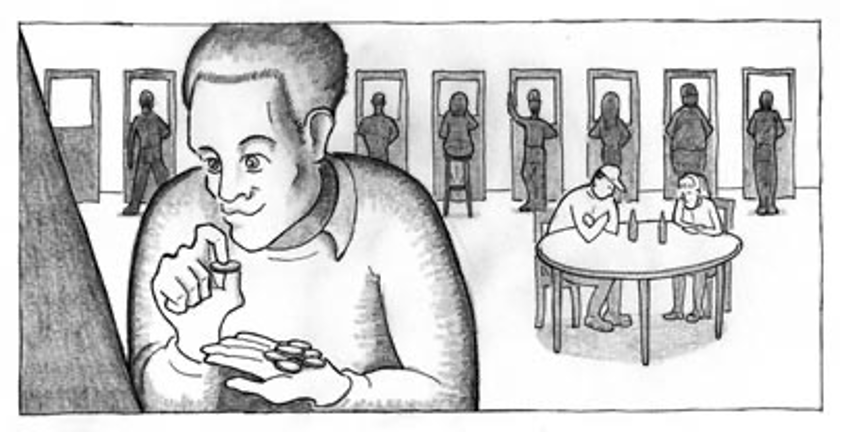
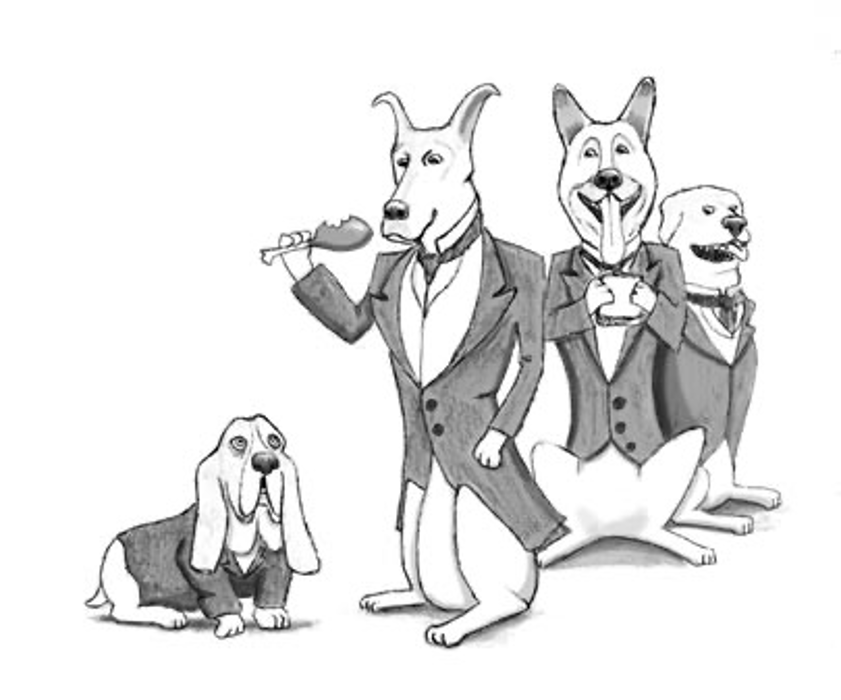
Cover art and pictures throughout the issue by Clarke MacDonald
Clarke MacDonald is a designer and illustrator living in Halifax, Nova Scotia. He is a founding partner in Moxi Creative, a virtual marketing agency, and is a part-time continuing studies instructor at the Nova Scotia College of Art and Design.
Letters for October 2008
Re: "History Does Matter" by Margaret Conrad
“The truth is that most Canadians know little about Atlantic Canada.”
That’s the one sentence from Margaret Conrad’s essay that spoke most tellingly to me (“History Does Matter,” October 2008). I’ll hazard she wrote it with the same weariness I read it. There are a basket of easy clichés and prefabricated pseudo-thoughts about the Atlantic provinces that some people cherish in place of any real acquaintance with the facts, the people or the region.
A few jokes about unemployment insurance, deploring the “dependency culture,” the “why don’t they move if there’s no work?” meme (not raised when it’s auto jobs in Windsor) and the “terrible burden” of Ontario “subsidizing the whole East Coast” pass for the sum of all knowledge. And, of course “they’re very friendly down there.” The view from the mainland is nearly as shallow as it is condescending.
I think, for example, it is fair to wonder what the response would be if, on a single day, 600,000 jobs were lost in Ontario. Every newspaper, radio and television station would start running daylong specials until eternity if such a shock to the central province’s economic, social and cultural existence occurred. But when 30,000 jobs, in an industry that could claim half a millennium’s tenure—the fishery—were lost in Newfoundland, it was hardly more than days when the “terrible cost” of assisting those hauled from an honest and ennobling occupation started to “worry” observers upalong. In Newfoundland, 30,000 is the equivalent of 600,000 in Ontario.
Problems or challenges in the Atlantic region do not rank with problems or challenges in the centre. That’s the hardest truth that people on the East Coast carry. And they do not rank because, unconsciously or otherwise, the far eastern margins of this country really are marginal to those who most think about, or move, the dynamics of Confederation.
Another hard truth carried by most people from the East Coast is that they are weary of trying to oppose or fix the lazy second-hand view of their life and circumstance. Special pleading is distasteful and unprideful both; and fishing for victim status, which is one definition of successful politics these days, is highly unattractive to those who, as will be clear on close examination, take more solace from stoicism than hope from whining.
I think Margaret Conrad’s essay is on many fronts dead-on. But that sentence was her fullest.
Rex Murphy
Toronto, OntarioResponse to History Does Matter
Re: "Control-Freak Kingdom" by Brian Flemming
Touche!, Brian Flemming. “Canadians and the parliamentary press gallery are yearning for an appropriate metaphor to describe what has been happening in Harper’s Ottawa … Some meaningful metaphor is needed soon - to stir a slumbering Canadian electorate into beginning to grasp the growing threats to their freedoms and their democracy. The court metaphor Savoie uses is too cerebral to fly.”
According to Flemming, Chapter 6, “Searching for Values” in Donald J. Savoie’s Court Government And The Collapse of Accountability in Canada and the United Kingdom, identifies the exemplary conscientious behavior of David Kelly, a UK Defence Ministry weapons inspector who publicly contradicted the Tony Blair Government’s since-discredited allegations of Iraqi “weapons of mass destruction.”
Savoie documents in chapter 6 (p 233) and elsewhere (pp 139 and 249) Blair’s persecution of Dr Kelly, featuring hostile questions in Parliament. According to Savoie, Kelly committed suicide shortly after Blair began this harassment. Blair’s cruel mishandling of the Kelly case, which “gripped the entire country,” originated with Blair’s manipulation of policy led intelligence, apparently “to justify a war when other arguments were cutting too little ice with the public.”
Inspector David Kelly discovered and blew the whistle on specious manipulation of nuclear data. So did Linda Keen, former President and CEO of Canadian Nuclear Safety Commission, Canada’s nuclear regulator, who refused to license operation of Atomic Energy of Canada Limited’s “NRU” nuclear research reactor at Chalk River, Ontario, after CNSC scientific & engineering inspectors discovered that NRU failed CNSC’s earthquake resistance standard.
Stephen Harper’s “court government” pushed Bill C-38 through a nocturnal Parliament on 12 December 2007, suspending CNSC regulation of NRU for 120 dangerous days.
Harper's pretext for C-38 was that NRU produces most of the world's medical diagnostic radio-isotopes. However, Nuclear Engineering International statistics (“Curies for patients,” July 2008, p 26) reveal that Harper relied mainly on the dollar value of Canada’s radioactive isotope production, compared with other isotope exporters. Dollar worth does not gauge quantities of radio-isotopes, which are measured scientifically in units of curies.
Canada’s opposition parties rolled over and accepted Bill C-38, and the result undermined Keen’s Commission. Bloc, Liberals and NDP were unable to appreciate the inherent risks in C-38 and to detect Harper’s deplorable anti-scientific bias.
Emboldened by baseless, panicky “all-party assent” to C-38 Minister of Natural Resources Gary Lunn, who supervised both CNSC and AECL, abruptly demoted Ms Keen on January 15. In February, Keen sought judicial review of all aspects of her demotion.
In acknowledgment of the “talented, independent” civil service epitomized by Kelly and Keen, which emphasizes “strict and systematic discipline and control in the conduct of the offices they occupy [under] calculable rules” (Savoie, p 5, citing sociologist Max Weber’s public service model), why not fly Savoie’s diffuse “court government” metaphor under the replacement flag “safety second government?”
Harper’s recent ministerial shuffle of Gary Lunn out of the prestigious natural resources portfolio into amateur sport (lauded on October 31 by the Vancouver Organizing Committee for the 2010 Olympic Games), surely heralds an appropriate occasion to exonerate and compensate Canada’s “safety first” inspector and accountability leader Linda Keen.
Stephen Salaff
Toronto, OntarioResponse to Control-Freak Kingdom
The LRC welcomes letters. We reserve the right to publish such letters and edit them for length, clarity and accuracy. E-mail editor[at]lrcreview[dot]com.
Online Originals
Lincoln’s Prophet
A review of George Fetherling's Walt Whitman’s Secret: A Novel
Untying the Knot
A review of A History of Marriage by Elizabeth Abbott
The Winter of a Hundred Books
- More Online Originals »