
The Literary Review of Canada

To learn more about the LRC's recent shift to charitable status, click here.

Get free email updates!

Magazine Issue ›› July/August 2009

In the July/August 2009 Issue

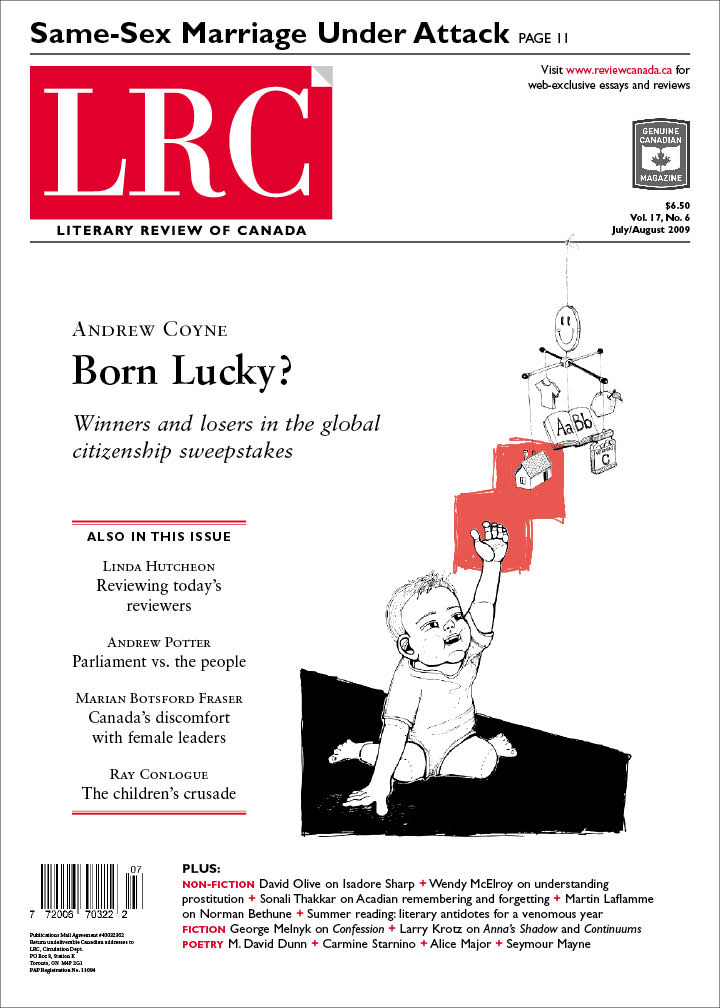
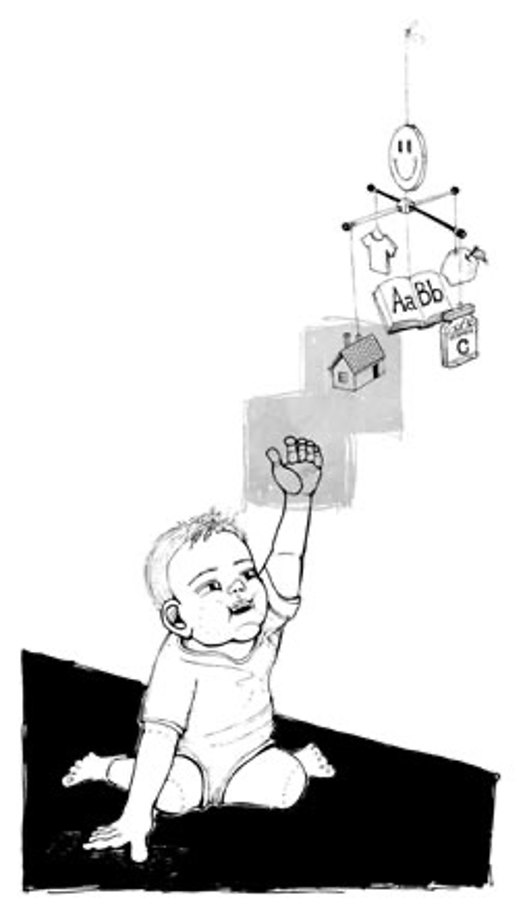
  • Our Feudal Immigration Policy

    A review of The Birthright Lottery: Citizenship and Global Inequality, by Ayelet Shachar

    Andrew Coyne
  • Reviewing Reviewing Today

    “No customer reviews yet. Be the first.” (Amazon.com)

    Linda Hutcheon
  • A Digital Trojan Horse

    A review of Sheeple: Caucus Confidential in Stephen Harper's Ottawa, by Garth Turner

    John Baglow
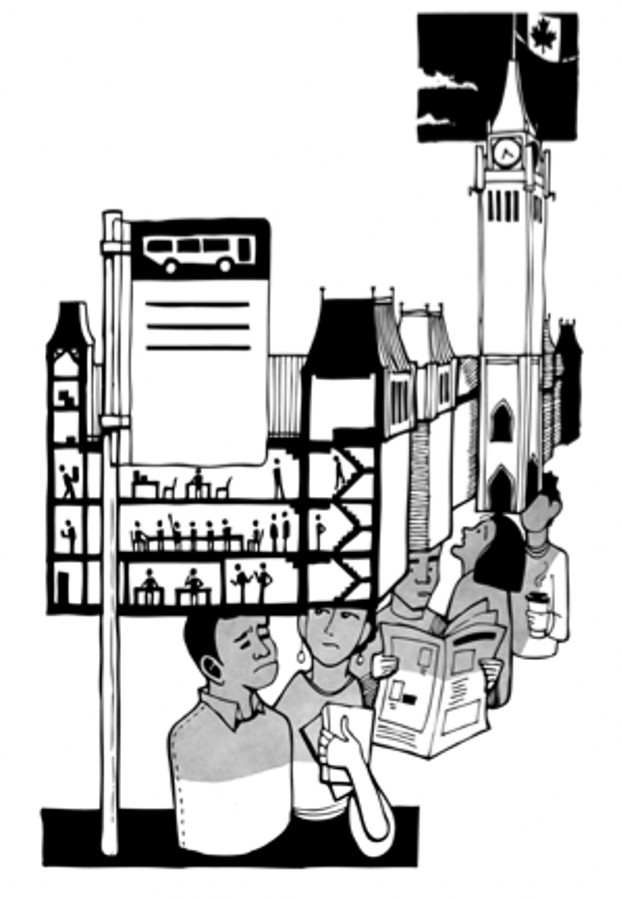
  • Unbalanced Thoughts

    A review of Peter Russell's and Lorne Sossin's Parliamentary Democracy in Crisis.

    Andrew Potter
  • Bad Faith?

    A review of David Novak's In Defense of Religious Liberty.

    Charles Blattberg
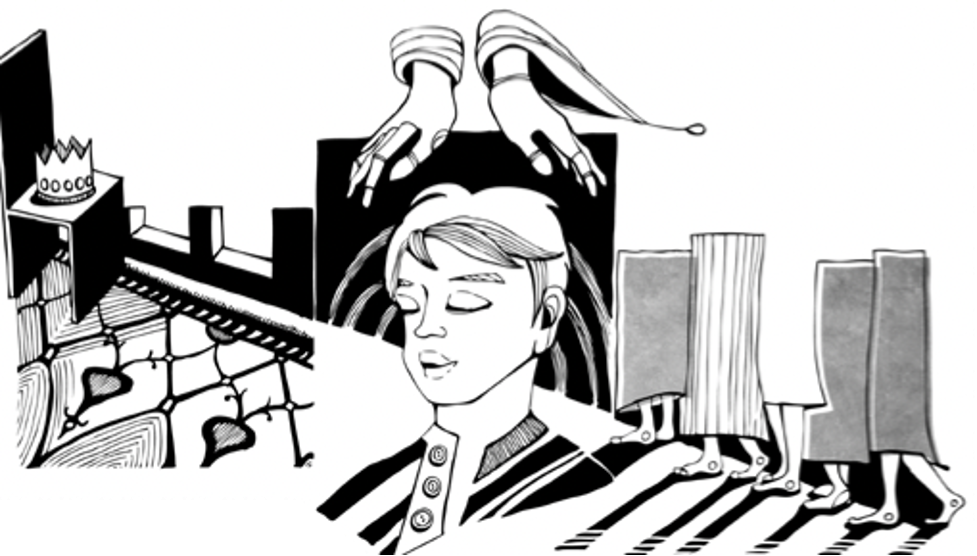
  • Revisiting a Powerful Myth

    A review of The Children’s Crusade: Medieval History, Modern Mythistory by Gary Dickson and Children's Crusade by Murray Schafer

    Ray Conlogue
  • Pick Your Antidote

    Short reviews of ten books past and present.

    LRC Staff
  • The Drought Farmer Doubts His Guidance Counsellor's Advice

    Mark D. Dunn
  • Thought in Action

    A review of Norman Bethune, by Adrienne Clarkson and “Norman Bethune: trail of Solidarity — La huella solidaria” at the McCord Museum of Canadian History

    Martin Laflamme
  • Our Problem with Women

    A review of Women, Power, Politics: The Hidden Story of Canada's Unfinished Democracy, by Sylvia Bashevkin

    Marian Botsford Fraser
  • A Hotel for All Seasons

    A review of Four Seasons: The Story of a Business Philosophy, by Isadore Sharp

    David Olive
  • Nous aussi nous souvenons

    A review of Ronald Rudin's Remembering and Forgetting in Acadie: A Historian's Journey Through Public Memory

    Sonali Thakkar
  • The Drought Farmer Doubts His Guidance Counsellor's Advice

    A poem

    M. David Dunn
  • Virginia

    A poem

    Carmine Starnino
  • Glosa: The Weather

    A poem

    Alice Major
  • Libations, Force

    Two word sonnets

    Seymour Mayne
  • Science and Romance

    A review of Anna's Shadow, by David Manicom, and Continuums, by Robert Carr

    Larry Krotz
  • A Broken Head

    A review of Confession, by Lee Gowan

    George Melnyk
  • Misreading Prostitution

    A review of Gangs and Girls: Understanding Juvenile Prostitution, by Michel Dorais and Patrice Corriveau, and The Johns: Sex for Sale and the Men Who Buy It, by Victor Malarek

    Wendy McElroy
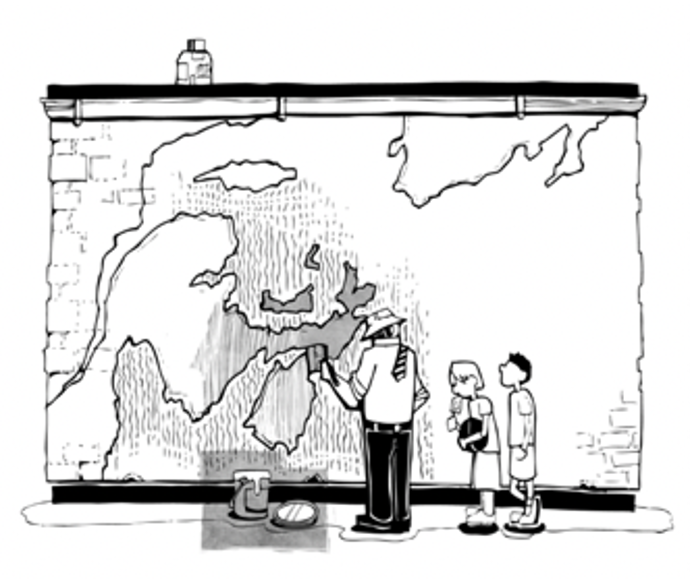
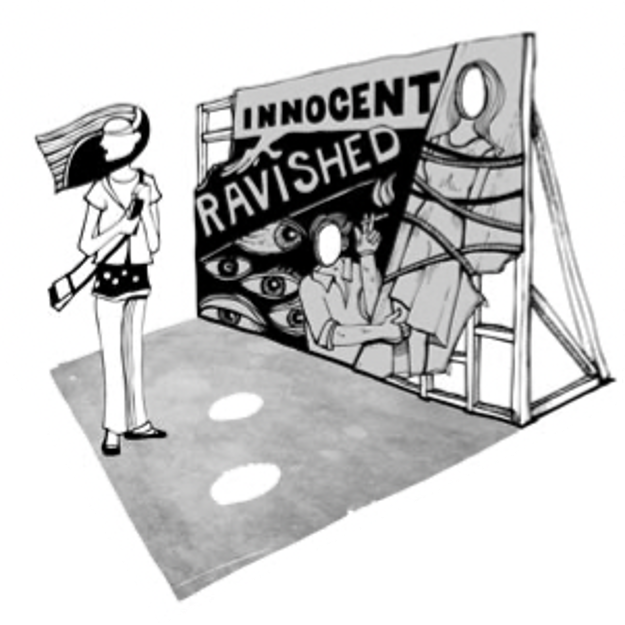
  • Cover art and pictures throughout the issue by Justin Chen.

    Justin Chen is an illustrator based in Vancouver, British Columbia. His work has appeared in Ricepaper, SubTerrain Magazine and Crow Toes Quarterly. More examples of his work can be seen at jkhc.blogspot.com.

Letters for July/August 2009

  • Re: “Our Feudal Immigration Policy” by Andrew Coyne

    Andrew Coyne’s review of my book, The Birthright Lottery: Citizenship and Global Inequality, is smart and witty. I enjoyed reading it. Coyne accepts the core argument of the book, namely, that we can draw a fruitful analogy between birthright citizenship and inherited property. So far, so good; I hope all my readers, just like Coyne, agree that the established legal connection between station of birth and the distribution of political membership, wealth and opportunity can no longer be taken for granted, nor can it be ignored. Coyne’s recommended response (“let them [the world’s poor] in”) diverges, however, from mine at three important levels.

    First, my book proposes a new way of thinking about the significance of citizenship—perhaps the most important institution of the modern era, adding a global distributive dimension that moves beyond the standard emphasis on status, rights and identity. It is not another meditation on Canada’s immigration policy, endlessly debating how open or closed it should be, as Coyne’s review might suggest.

    Second, the distinction that I draw between narrow and broad conceptions of property is important in elaborating what kind of a society we wish to live in as equal citizens; I offer a vision where everyone and anyone included in the circle of members has the “right not to be excluded” from whatever state-backed rights and protections attach to citizenship. Coyne mistakenly interprets this commitment as equivalent to the “right of others to take it [property] from you.” This is plainly wrong; if that were my position, I would have argued in favour of either abolishing borders or establishing a world state. In my book I contemplate and flatly reject both options. Instead, I look for a balance between preserving the enabling qualities of citizenship and improving the well-being of those excluded from such benefits simply by accident of birth.

    Third, by treating the automatic and perpetual transmission of citizenship by birth as a weak moral link, resembling now-discredited medieval entail property regimes, The Birthright Lottery invites legal innovation. One such option is found in a “genuine-connection” citizenship principle, which expands our membership boundaries beyond outdated notions of blood-and-soil. Another option suggests placing a “birthright privilege levy” on those benefiting from inherited membership, with the aim of ameliorating its most glaring opportunity inequalities. To this Coyne objects—not because he disputes the urgency of remedying the injustices of the birthright lottery, but because he prefers non-binding solutions over obligatory ones.

    Yet the alternative of unrestricted migration that Coyne embraces is, ironically, far more demanding. I explain in the book that the problem with such a solution lies primarily in the numbers: the latest statistics show that approximately 1.75 million immigrants are admitted annually by leading member countries of the Organisation for Economic Co-operation and Development. The population residing in the world’s poorer or less stable regions amounts to roughly 4.5 billion. This leads to a ratio of 1:1,500 (0.00065 percent) between those granted admission and those who may wish it. This is too large a gap to be closed by any single country, even if it declares its borders to be as open as possible. To stand even a razor-thin chance of success, the world’s wealthy countries would have to adopt such a policy in concert. This is far more imposing than the proposed birthright privilege levy. If we are doomed to a choice between the polished naysayer and the constructive optimist, I’ll proudly carry the torch of the latter.

    Ayelet Shachar
    Toronto, Ontario

    Response to Our Feudal Immigration Policy

  • Re: “Unbalanced Thoughts” by Andrew Potter

    Andrew Potter claims that our book, Parliamentary Democracy in Crisis, suffers from the fact that “every author is a devout parliamentarian.” As a result, the book in his view fails to reflect the debate between the parliamentarians and the “democrats.” Democrats are those who, after observing our constitution in action during the crisis last winter, “just did not like what they saw.”

    While acknowledging that “coalitions and parliamentary government” form only one part of the study, Potter justifies his charge of one-sidedness almost entirely in that sphere. By contrast, he praises the “duelling essays” by Andrew Heard and Ned Franks on whether the governor general was right to prorogue Parliament. He might have added that similarly diverse ranges of views are presented on the scope and status of constitutional conventions, and on whether those conventions are sufficient to the task of providing guidance through the storms Canada witnessed last winter. To Potter, these parts of the book merit little more than passing mention.

    But now let us turn to Andrew Potter’s big disappointment with our book. In his view the book is hopelessly one-sided. Its contributors are all supporters of parliamentary government and opponents of the Harper Conservatives. Indeed, Potter claims the worst sin of this collective of parliamentarians is to have conflated their constitutional views with political partisanship.

    As editors we certainly plead guilty to part of this charge. We ourselves believe in parliamentary democracy as do the authors whom we invited to contribute to the book. But we reject the charge that we failed to prevent our “personal political views from turning into a judgement about the validity of the system as a whole.” The chapters on granting prorogation show a range of perspectives and verdicts, and are fundamentally concerned with the role of the governor general as a protector of parliamentary democracy.

    It is true that none of the authors embraces the move away from parliamentary democracy to populist democracy that Harper espoused in insisting that a change of government from one party to another can be made only by the electorate, not by Parliament, or his view that coalitions that have not been approved by the electorate are illegitimate. We are of the view that in a parliamentary democracy it is the assembly elected by the people that determines who governs. The elected members of Parliament do this by showing which party or combination of parties a majority of them have confidence in. If Harper, Potter and the populists he thinks we should have included in our book want to make fundamental changes in the should organize a democratic and deliberative process for achieving that transformation.

    Peter H. Russell and Lorne Sossin
    Toronto, Ontario

    Response to Unbalanced Thoughts

  • Re: “Unbalanced Thoughts” by Andrew Potter

    Andrew Potter’s perceptive and very critical review of Peter Russell and Lorne Sossin’s edited collection of essays about last fall’s constitutional crisis could have been even more critical.

    What Potter labels the “parliamentarian” position about the crisis (as opposed to the “democrat” position) was hugely flawed even on its own terms, stuck as they are somewhere back in the 19th century. If Stephen Harper’s government had lost a confidence vote in Parliament and the governor general had denied Harper a request to dissolve Parliament to test Canadians’ opinion on whether they supported a coalition based on a legislative agreement with a separatist party, Harper would very properly have concluded that the governor general was behaving unconstitutionally. His recourse would have been to insist that she be dismissed from office by Queen Elizabeth II. There is no possibility that the Queen could deny such a request from her Canadian prime minister.

    Potter is not quite right either in accepting the conventional view that Harper was almost entirely to blame for the crisis. In fact, the coalition scheme went ahead after the Conservatives had agreed to withdraw the offensive proposals in their fiscal update. It seems to have been fuelled by a strange combination of naive Liberal lunacy, NDP and Bloc Québécois opportunism, parliamentary Press Gallery gullibility and the PoliSci 100 view of how parliamentary systems work put forward by Professor Russell and many of his friends. Is there a single politician in Ottawa now who believes that the coalition scheme would have led to anything but political catastrophe for its principals? In hindsight, Harper probably should not have bothered proroguing Parliament—by the day the confidence vote was scheduled Canadians’ dislike of the madness was so clear that a significant number of supposed MPs’ votes against the government, especially Michael Ignatieff’s, would never have occurred.

    Canada and its politicians will continue to be haunted by this crisis. The next election campaign will be a Conservative strategist’s delight as the opposition politicians have to promise that under no circumstances will they resurrect the coalition plus explain why their promises should be believed because immediately after the last election they broke exactly the same promises. Ignatieff will have some additional personal squirming to do to explain why if he did not believe in a coalition he nonetheless signed on to the deal.

    Possibly more seriously, the whole mess of that crisis ought to underline how ill suited Canada’s monarchical government has become for a 21st-century democracy. The mostly ceremonial office of the governor general cannot easily be adjusted to guarantee responsible handling of the many kinds of political crises that minority government situations may generate. Add to this the absurd anachronism of the role that the British royal family plays in the system (any day Canadians could wake up to find that Charles Windsor is the King of Canada), and it seems clear that we are sleepwalking toward either disaster or high comedy, or perhaps both.

    More serious thought and leadership ought to be given to the problem of how to modernize the institutions crucial to the governance of Canada. Unfortunately we may first have to modernize many of our self-proclaimed constitutional experts.

    Michael Bliss
    Toronto, Ontario

    Response to Unbalanced Thoughts

  • Re: “Unbalanced Thoughts” by Andrew Potter

    Andrew Potter was kind enough to draw attention to arguments advanced by Rick Van Loon, Michael Bliss and myself during last fall’s showdown in Parliament. One can wonder why these arguments were excluded from Peter Russell and Lorne Sossin’s book (it certainly was not due to academic qualifications or practical experience). However, the more troublesome issue is the result. Let’s be clear: While Prime Minister Harper can be fairly accused of having misinformed Canadians about how they are governed, his transgression pales in comparison to the disinformation propagated by academic, journalistic and political defenders of the coalition. And I’d be prepared to debate that point, in both official languages, anywhere in Canada.

    Norman Spector
    Victoria, British Columbia

    Response to Unbalanced Thoughts

  • Re: “Unbalanced Thoughts” by Andrew Potter

    I don't think I represent a minority opinion from the "Great Unwashed" beyond the borders of Metro Toronto when I say that our system of government worked well in the crisis at the end of last year. Harper went to see the governor general, who acted more sensibly than most of our politicians, to say nothing of our political commentators. I do not think an elected president could have done better. In fact, she/he would probably have done worse, for she would have been a political figure who would be seen to represent a political party. As it was, Harper went into Rideau Hall a neo-conservative and emerged a couple hours later not much different from a Liberal, which has made his government hard for Ignatieff to oppose.

    Nor do I think that Charles Windsor would be a disaster as king of Canada. If Ted Kennedy could survive Chappaquiddick and become a respected statesman, Charles Windsor should be able to survive Camilla, although admittedly she is a millstone around the neck of the monarchy. We have evolved our own form of government in Ottawa as a crowned republic, and it works. Moreover, the Canadian monarchy is the basis of our claim to the Arctic islands: in 1880, Britain transferred these islands from the government of Queen Victoria and her successors in Britain to her government in Canada simply by orders-in-council.

    James Allan Evans
    Mayne Island, British Columbia

    Response to Unbalanced Thoughts

  • Re: “Misreading Prostitution” by Wendy McElroy

    It was with interest that we read Wendy McElroy’s review of our book, Gangs and Girls: Understanding Juvenile Prostitution. Alas, our disappointment in the integrity of this review far exceeded McElroy’s disappointment.

    The review frequently criticizes our “poor methodology,” although we specifically included a detailed explanation of our research methods, their motives and limitations. We interviewed 50 social workers who work with juvenile prostitutes: this was our point of departure and our primary interview sample. Many of those interviewed had had voluminous casework experience with young girls in prostitution over the course of their careers, which was invaluable in helping us map the spectrum of individuals involved in juvenile prostitution.

    The accusation that “the researchers discard such ‘expert’ accounts if they do not like them” is absolutely unfounded. It was the social workers themselves who noted that many outreach workers in youth protection were unnerved by the phenomenon of juvenile prostitution. The idea that we would dismiss findings contrary to our own is equally unfounded. We simply noted that young girls tend to under-report their own sexual abuse; furthermore, we detail why this is the case: “No girl want to be known as a slut, ‘the one who did all the boys’ … Instead of using words that force them to look these experiences squarely in the face, they may think of them and describe them as survival sex … she learns to keep her status as a sex object a secret.” This is not something we invented—it was based on the testimony of the young women we interviewed. Moreover, we make no “sensational statements” about the johns who frequent juvenile prostitutes. We limited ourselves to discussing the existing research on the clients of prostitution, while citing precisely that there currently exists no research focused on the johns of underage prostitutes.

    That McElroy could write “the researchers recommend the decriminalization of prostitution” is frankly astounding. Nowhere in the book do we ever take a position on this subject. Indeed, the book is not about adult prostitution, about which a discussion of criminalization would be relevant.

    What is most disappointing is McElroy’s characterization of our solutions as unsatisfying. The last three chapters are dedicated to innovative methods of prevention and intervention to help both young girls and the gang members who are their pimps. McElroy thinks there “is no reason to believe their solution will work.” I would invite her to Quebec where the methods we outline have been implemented: she could meet the front-line workers who are our colleagues and who tell us that the book’s practical suggestions have significantly improved their way of doing things.

    Michel Dorais and Patrice Corriveau
    Quebec, Quebec

  • Re: “Reviewing Reviewing Today” by Linda Hutcheon

    As a reviewer myself, I was fascinated by Linda Hutcheon’s overview of the craft in the July/August issue. To her survey of the functions of reviewing, I would add just one: entertainment.

    Reviewers are writers just like other writers (or much like them, at least), and one of their roles is to entertain an audience. I remember reading Jay Scott’s film reviews in The Globe and Mail years ago, not just to see what he thought of the latest Hollywood offerings, but simply to enjoy the flow of his prose.

    A playwright I knew once remarked to me bitterly that reviewers and critics were mere parasites, living off other writers’ writing. But all writers are parasites in that sense (even playwrights, I would think): you have to find your material somewhere; it’s what you do with it that matters.

    My favourite reviews, actually, are hardly reviews at all in a way; certainly, they do not focus on the evaluation function that Linda Hutcheon mentions. These are the long, leisurely reviews in such places as the New York Review of Books, in which the subject matter of the book under review becomes the real topic of the “review,” which may not bother with evaluation at all. These review-essays do serve the function of dissemination of information, but less about the book under review than the subject itself. And they provide commentary and explanation and, if well written, pleasure. I read them not as a guide to what books to read, but as an end in themselves.

    That playwright I mentioned wanted to know what purpose I thought reviews should serve: to benefit the writer by providing some sort of advice, or to be a sort of Consumer Reports for prospective book buyers. Neither, I said. My aim in reviewing is to have readers enjoy my review. That may be what prompted his bitter parasites remark, but surely every writer hopes that what he writes will provide enjoyment, even if he is only writing a letter to the editor.

    Sheldon Goldfarb
    Vancouver, British Columbia

    Response to Reviewing Reviewing Today

  • Re: “Eat, Worship, Fear, Coddle” by J. Edward Chamberlin

    In his review, Edward Chamberlin has offered observations on human-animal relationships, evidently sparked by his reading of my book The Dog by the Cradle, the Serpent Beneath. But Chamberlin has not actually reviewed my book—by which I mean describing its contents and proffering critical reactions to my examination of the paradoxes implicit in our dealings with animals. I think LRC readers would be interested in knowing something about the specific paradoxes I encountered in conversations with academics and other experts engaged with animals, and some of the acute contradictions faced by humanity throughout history—particularly by those who care most about non-human beings.

    Temple Grandin, the renowned advocate of “humane slaughter” (itself a paradox) spoke movingly to me of her deep affection for livestock animals, but also was adamant in her insistence that humans require animal protein in order to prosper. On the vegan end of the spectrum, a British animal rights activist named Ronnie Lee evinced guilt about sneaking meat to a pet dog unable to thrive on a vegetable diet, yet expressed no qualms about acts of violence committed against directors of laboratories that experiment on animals.

    Even more central than the interviews was my journey to the paradoxical heart of an old, old story about a dog left alone to guard the cradle of his master’s baby. In the story, a large snake appears and slithers toward the cradle. The dog attacks and, after a prolonged struggle, kills it. But when the master returns, he immediately misreads the bloody evidence of the struggle as an assault by the dog on his child. Without further investigation, he draws his sword and slays his formerly trusted companion—before discovering his child unharmed beneath the overturned cradle. When I began my research, this ancient and ubiquitous tale struck me as an ideal entry point into several contradictions in our long, ambivalent relationships with non-humankind. But when, in the course of my investigations, I learned that, in 13th-century France, a dog had been slain by his master under those circumstances, the significance of the story increased exponentially. That there really had been such a dog was astonishing enough. Even more amazing was historical evidence of a cult of worship of the wronged animal’s remains, including pleas for intercession by this dog (called “St. Guinefort” by the peasantry) on behalf of ailing children, in rituals that have persisted for more than 700 years.

    A faithful dog turned mistrusted monster, turned martyr, turned saint, turned holy healer of children may be, on one hand, an anomaly in the annals of human-animal history. On the other hand, that singular story illuminates many paradoxes in human attitudes toward animals right to the present moment.

    Ironically, the very spot in rural France in which the martyred greyhound Guinefort is memorialized points up the frequent absence of animals from human consideration. When I reached that place, I noted a roadside plaque proclaiming it as “The Woods of St. Guinefort,” where seven centuries’ worth of cultish worship had gone on. Nowhere did the plaque indicate that St. Guinefort was a dog. Reading what was and what wasn’t written there, I perceived perhaps the most striking contradiction of all: For all their ubiquity in human history, animals are often beneath our radar—perhaps because of our longstanding uneasiness about their multiple roles in our lives. Getting the opportunity to write a book about that may not entirely resolve that ultimate paradox. But I hope it goes some way toward redressing an astounding imbalance.

    Erika Ritter
    Toronto, Ontario

The LRC welcomes letters. We reserve the right to publish such letters and edit them for length, clarity and accuracy. E-mail editor[at]lrcreview[dot]com.

Online Originals