
The present moment is a wonderful moment. That’s the mantra that stuck in my head while reading Dead Bees Still Sting, Susan Cormier’s meditation on semi-agricultural life on a small farm. The book is a first for the spoken-word artist and filmmaker, and an outgrowth of her essay “Advice to a New Beekeeper,” which won the 2022 CBC Nonfiction Prize. Her latest work still has plenty of insights for budding apiarists as well as for anyone who lusts after the peace of nature. But this is not the atmosphere Cormier evokes. Living on an acreage with domesticated and wild animals takes presence of mind precisely because the present has a way of intruding on a person’s plans for the next hour, day, week — if not a whole season. When things get complex, as they often do when residing alongside a menagerie, it’s necessary to stay in the here and now.
Sometimes the realities of rural life mean abandoning intentions to do modern things with modern appliances when a storm knocks out the electricity. Or pulling on some gloves and taking the time to clean up the house next door after a tenant has vacated and left behind enough detritus to elicit human opportunists. Or not cutting down an unproductive fruit tree because a bird has nested in it.
In the prologue, Cormier watches a windstorm from her porch, which is appropriate given that the other storm that’s coming is the whirlwind of humanity: bulldozers, cranes, big buildings, and bright lights that are creeping ever closer to her property. “We stand like deer in this Anthropocene, ears cocked toward the horizon,” she writes. “The air is electric, the sky greengray and moving.” She goes on: “There will be change.”
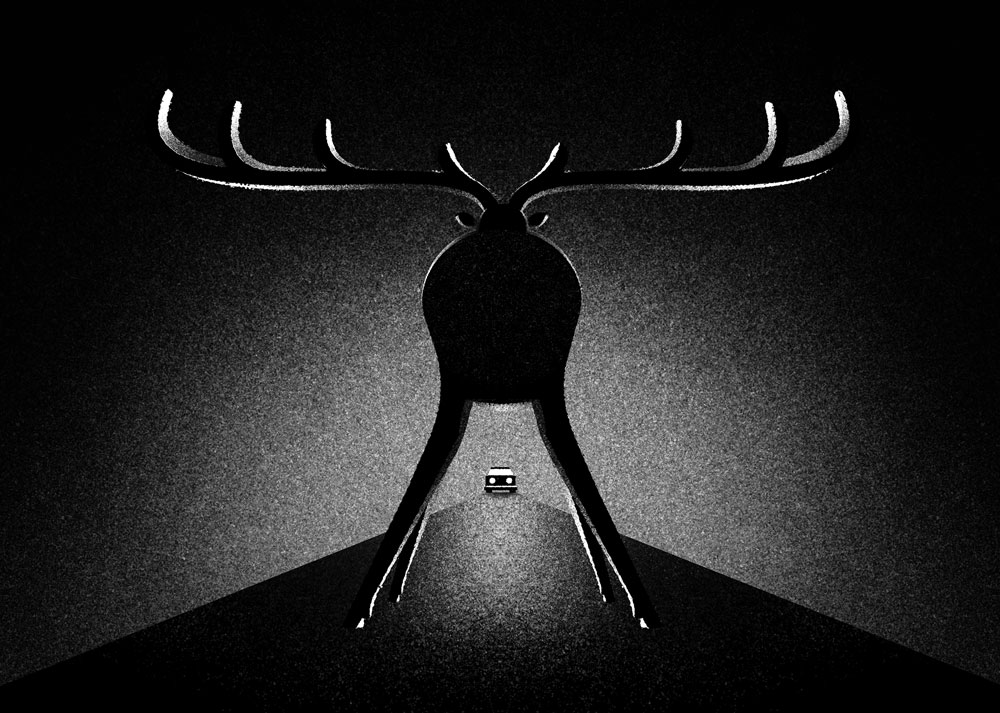
How should we act if we’re on a collision course with climate change?
Karsten Petrat
Writing at the nexus of nature and the built environment, Cormier is clear-eyed and admirably detached about the city bleeding into the forests and fields in British Columbia’s Lower Mainland, where her home has been a rural refuge for the past thirty years. Instead of lamenting what will soon be lost, she takes us on a journey through five seasons of sharing the unexpected happenings — the sad, the worrisome, and the delightful — when one is beholden to an ever-changing cast of creatures. Although beekeeping frames the memoir, her flock of quail are the most memorable characters. Cormier never meant to keep the birds, but after a neighbour hatched a small blue egg, having thought it was a robin, she agreed to rear the chick. It wasn’t the first time the author had fallen into the role of unintentional animal caregiver. Cormier acquired her bees when her partner’s hive swarmed and she set out to contain the colony.
I get the sense that Cormier has tumbled into tending to the “more than human” time and again not by accident but because she pays attention. Popularized by the eco-philosopher David Abram, the term “more than human” is an invitation to respect the creatures with whom we share this planet as part of a living community that sustains us all. Cormier is not simply an animal lover with good intentions. She understands that the lives she intervenes in are of no less value than her own and that she is as hitched to them as they are to her. Here she evokes an Indigenous world view — her heritage is Anishinaabe and Métis — as well as the beliefs of a growing movement. In 2022, the legal scholar César Rodríguez-Garavito established the More-Than-Human Life Program at New York University. MOTH focuses on advancing rights for all beings. “This is why the etymology of the word ‘human’ is helpful,” Rodríguez-Garavito said in a talk last year, “the root of which means earth, soil, humus.”
When Cormier’s quail chick grew, she realized she had to find friends for her solitary bird, which she named Birb. As I read this section, I was instantly transported to another book by a woman with a deep relationship with the natural world: Upstream, by Mary Oliver. In that collection of essays, from 2016, Oliver catalogued her quiet enjoyment of her surroundings, partaking in her own stint of avian guardianship: in this case, with a wounded gull. And, like Cormier, she found the less appealing crawlies, such as spiders, worthy of protection and consideration too.
I read Upstream in the morning, during that special time reserved for my most concentrated attention: the fifteen minutes after waking up and making coffee. At first I approached Dead Bees Still Sting in the evening, but then I began to pick it up earlier so that I could be more mindful of the lives Cormier depicts. I was so struck by how well she has come to know the aliens in her midst — animals — that it made me critical of my other, lighter nighttime fare: Andy Weir’s Project Hail Mary, which features an extraterrestrial protagonist, but he’s essentially a human in a carapace. Yes, it’s fiction, but Weir’s story exemplifies a lack of patience with working hard to understand different life forms.
Cormier respects the denizens she lives among by accepting them on their own terms and not by simply anthropomorphizing. “Learn the language of bees,” she writes. “There is no lexicon, no dictionary. They speak in song and scent and secrets and dance.” Notice the low hum of calm, “the ramping pitch of outrage,” she says. “You cannot speak it, but you can listen. Listen with your body.”
After close study and years of experience, Cormier is obviously in tune with her many honeybees. Insects, in general, seem more difficult to fathom than a quail chick or a dog, so the desire to share that hard-won knowledge is understandable. But I don’t know that beekeeping provides the best focal point for this memoir — mostly because the practice has been coming under fire from ecologists for its significant impact on the biodiversity of ecosystems. I kept waiting for the author to acknowledge this.
Bees “are legion,” she writes. “And so, too, are humans: legion, many. In the countryside, people spread out with their farms and gardens and orchards and ranches. In the city, they are densely packed, often hundreds per acre, stacked high in apartment buildings and condominiums.” Without the beekeepers, she says, even modest-sized harvests require too much from native pollinators. That’s true, but only to an extent.
What’s needed in farming — whether on a small or large scale — is a combination of pollinators. Edge habitat encourages the native bees, flies, and birds to hang out, which helps increase flower count. Even commercial honeybees are feeling the sting of expanding construction and the monocultures of big agriculture. A recent episode of the podcast Freakonomics Radio, called “Beeconomics 101,” dove into why the honey yield in the United States has dropped by half. As one beekeeper put it: “Well, habitat has changed. There’s a lot less blossoms, a lot less bloom.”
Cormier, a mini-scale producer, has plenty of edge habitat, and she cherishes its value to her bees and other animals. On occasion, her apiculture through line can suffer from some textbook-adjacent writing: “Bee stingers are modified ovipositors, retractable tubes that are used by females to deposit eggs. Male bees — drones — do not have stingers.” The author hits a more passionate groove when describing the difference between “beehavers” and “beekeepers”— the latter being more present and attuned to the needs of their winged charges. “Beehavers have bees,” she writes. They care deeply but haven’t done their research: “Beehavers observe their hive box with bees flying in and out of it and say their colony is alive. They do not see the spread of disease, the high rate of death, the struggle to survive.” Beekeepers, on the other hand, do see all this. They — like Cormier — know that the world of domesticated honeybees has become a pathogen soup since the turn of the century, as more and more hobbyists set up hives.
In an odd coincidence, before I opened this book, I had been brushing up on federal, provincial, and territorial regulations for beekeeping. British Columbia has relatively strict requirements around the practice. (Although ecologists will tell you those rules aren’t rigorous enough, and self-regulation is a problem.) So I found Cormier’s homily on the responsibility of caring for these colonies satisfying: the B.C. government should send her on the road to explain what the honeybee crisis is really about.
That sense of responsibility, though, goes far beyond the insects. Cormier grounds herself, and the reader, in the sensory world of the present — a world that so many people are severed from too early in life. In Dead Bees Still Sting, the author serves as a patient guide for anyone wishing to relearn how to experience the more-than-human plane of reality.
Jude Isabella is a science journalist in Victoria and the executive editor of bioGraphic.
Advertisement

Advertisement