
What do a baby crow and a rustling dress have in common? The noise they make, which is something like “high whispering trills and soft chortles.” At least, that is the case according to “The Art of Dying,” from Nadja Lubiw-Hazard’s debut collection, The Life of a Creature.
I have no idea what a fledgling crow sounds like, but I’m inclined to take the Toronto writer’s word for it. She worked as a veterinarian for many years before turning to a career in fiction. Her capacity to conjure such unusual associations feels rooted in experience, both as a vet and as someone whose imagination draws from somewhere beyond a world of binaries — especially when it comes to human and animal.
Lubiw-Hazard’s approach is equal parts medical and medicinal as she tends to sites of patriarchal ruin. Matter-of-fact narration directs the reader’s gaze toward trauma that’s inflicted on all kinds of beings without falling into total detachment or sensationalism. She masterfully renders the beauty that exists within grief, but these fifteen stories are as brutal as they are tender.
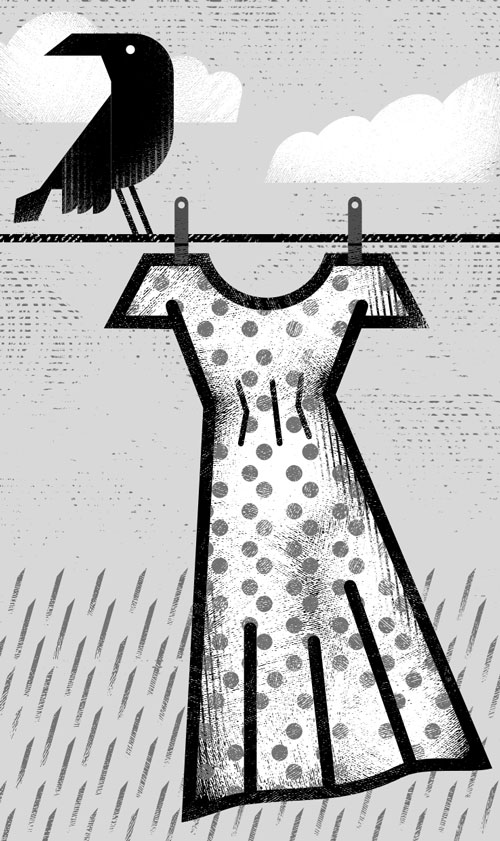
A writer who conjures unusual associations.
Matthew Daley
In the first entry, “The Life of a Creature,” a series of pets visit the office of an unnamed vet. A puppy arrives with diarrhea squirting out of his behind, “like the last bits of ketchup from an almost-empty bottle.” By the third story, “A Good Dog,” the tone settles into a grim realist’s view of the similarities between violence against women and violence against animals. “Captive” challenges the idea of right and wrong by juxtaposing the perspectives of a female polar bear trapped in a Mexican zoo and a boy who, after climbing into her enclosure, is mauled. “He wants to touch this magical bear, he wants to feel her wildness,” Lubiw-Hazard writes. “Then, there is blackness.”
Violence plays a range of roles throughout the book. “The Things We Left Behind” explores a kinship that exists among various kinds of humans and non-humans. Six sisters leave behind two beloved cats (among other things) to escape the tyranny of an abusive father. One grows up to be a dog whisperer, while another becomes a doctor who, years later, tells her siblings about doing surgery on a thirteen-year-old girl who has been raped. A middle sister feels the “terrible burden of our collective damage, not just our own small sisterhood, but that whole constellation of girls we hold hands with so tightly.”
That “constellation of girls” takes on a more nuanced meaning in “What Dwells Within.” The mysterious rape and murder of a German shepherd, Lady, becomes a way into other instances of misogyny and assault. Three young girls find the dog’s corpse — dressed in a nightgown and pearls — while playing in a neighbourhood ravine. Their subsequent game of detective is haunted by the spectre of another recent local killing: an eleven-year-old girl’s body was “found stuffed inside of a refrigerator.” Neither predator is ever caught.
Throughout this telling, Lubiw-Hazard rewrites a common narrative about gaining feminized consciousness: the moment one becomes aware that one’s body is marked as a target. In her version, this sudden realization that women experience is linked to the doomed fate of other non-humans. This story queers the meaning of sisterhood and, in doing so, brings to mind the feminist thinker Donna Haraway, who has observed that all creatures “are kin in the deepest sense” in that they “share a common ‘flesh.’ ”
Flesh is not a metaphor, especially in the hands of a vet who hints at having a surgery kink. “I even like all the preparations required,” admits the narrator of “Between Breaths,” who relishes “the three minutes of meticulous handwashing with chlorhexidine, followed by the nail brushing, rows of hard little bristles tingling against my fingertips; the ritual of gowning up, sterilized hands in the air as someone else ties you in from behind; the texture of powdered latex tight against each finger; the anonymity of the mask and cap and gown and gloves.”
Like her scalpel-wielding characters, Lubiw-Hazard seems to enjoy slicing into flesh in her prose. Physical mutilation and injuries connect the fates of all beings. She invites readers into the operating room to watch as categories bleed into one another: woman, animal, livestock, beast, pest, pet, predator, prey. From this vantage point, she reveals the way women, queer people, and others are especially vulnerable. In her fiction, they are often also capable of healing.
Ours is a world dominated by a small, powerful subset of humanity. With her broad definition of shared oppression, Lubiw-Hazard offers a welcome salve to this imbalance. That said, there’s a danger of being overly reductive in articulating the things we share. I’m not worried about reducing humans to animals (that’s what we are, after all). My concern is that, with this wide net, we could lose sight of the diversity that matters. What shapes how wild animals live and die compared with pets — or with stock raised for slaughter? What makes something a pest as opposed to a pollinator? The creatures in these stories can at times feel flat. Most of the human characters don’t differ noticeably in class, race, or gender. Despite venturing into the perspectives of turtles, house cats, feral dogs, insects, bears, and so many other beings, we rarely see the systems that treat these animals unevenly or find answers to some of the tougher moral questions that arise.
In “A Good Dog,” Edith imagines taking revenge on her abusive ex, years after he beat her beloved mutt to death. In the fantasy, “she’d rise up, up, up until she towered over him, until he was nothing but a cockroach at her feet,” and crush him. Lubiw-Hazard’s use of metaphor here enables a kind of transfer of violence. This might resonate with readers who view cockroaches as worthy of extermination, and the story clearly asks us to empathize with Edith. But the assumed disposability of a bug — and the human abuser it represents — is left untouched and unchallenged.
Nevertheless, Lubiw-Hazard’s call to join a scrappy new resistance lands with force in a moment of ecological collapse caused, in part, by violent, human-made industries. Her stories animate ideas that might transform more of us into better co-conspirators. If they sometimes struggle to account for the many hierarchies and critiques they smuggle in, they still insist that our future depends on recognizing forms of kinship that we’re used to ignoring.
Danielle Douez writes and edits in Montreal.
Advertisement
Advertisement