
Magazine Issue ›› May 2009
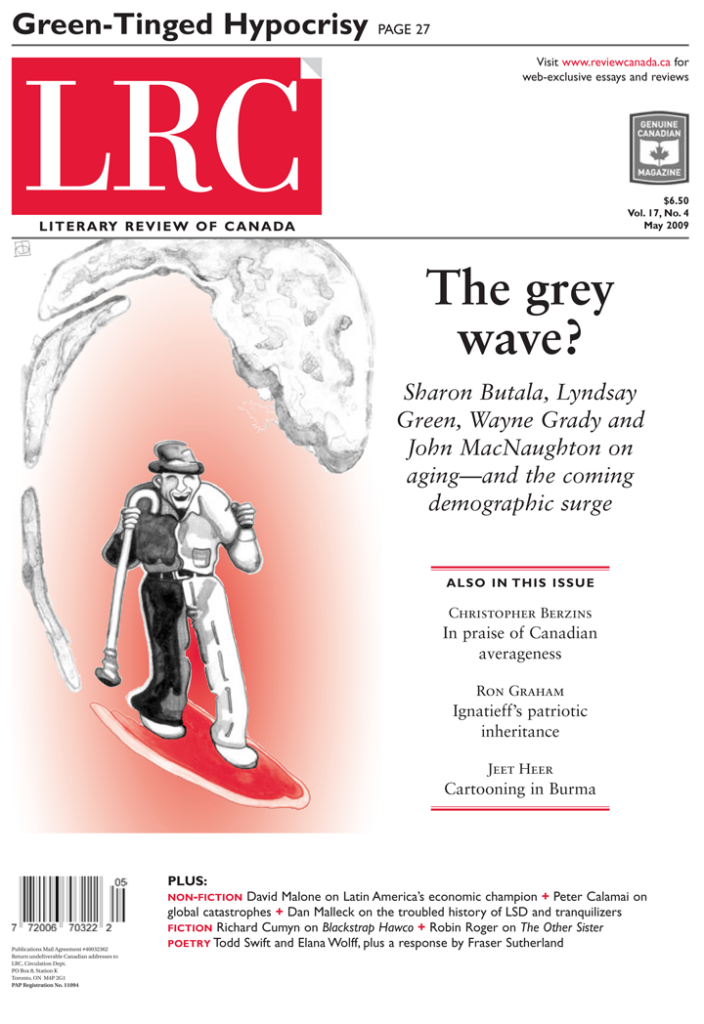
In the May 2009 Issue
-
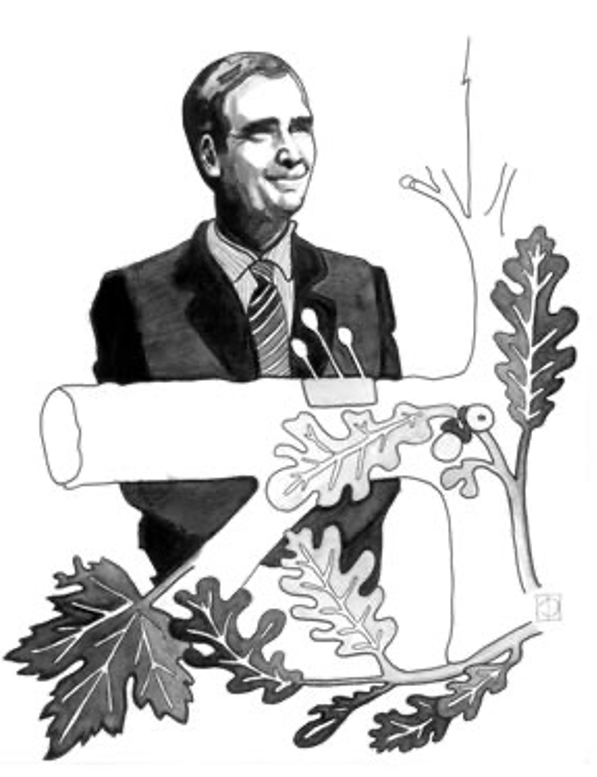
Intellectual Sleight of Hand
A review of True Patriot Love: Four Generations in Search of Canada, by Michael Ignatieff
-
Distilling Mute Despair
A review of Burma Chronicles, by Guy Delisle
-
Realistic Fortune Telling
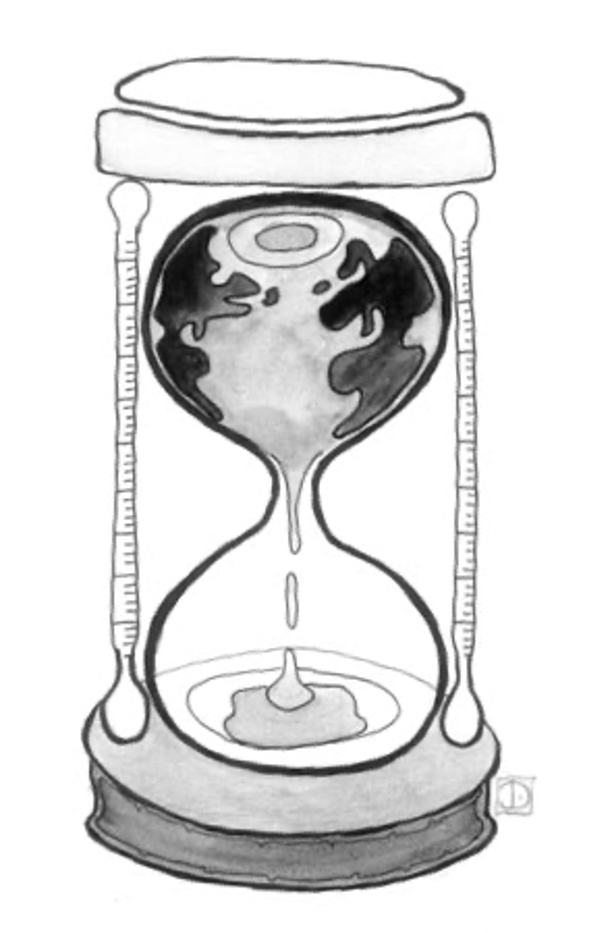
A review of Global Catastrophes and Trends: The Next Fifty Years, by Vaclav Smil
Let's Hear It for Being Average
An essay
A Modern Latin American Hero
A review of Life and Times of Raúl Prebisch, 1901–1986, by Edgar J. Dosman
When Good Drugs Go Bad
A review of Andrea Tone's The Age of Anxiety: A History of America's Turbulent Affair with Tranquilizers and Erika Dyck's Psychedelic Psychiatry: LSD from Clinic to Campus
A Response to James Pollock's Choosing the Best Canadian Poetry
Here or There
A poem
Gentlemen of Nerve
A poem
Beyond Empathy
A review of The Other Sister, by Lola Lemire Tostevin
Myth and Misadventure
A review of Blackstrap Hawco, by Kenneth J. Harvey
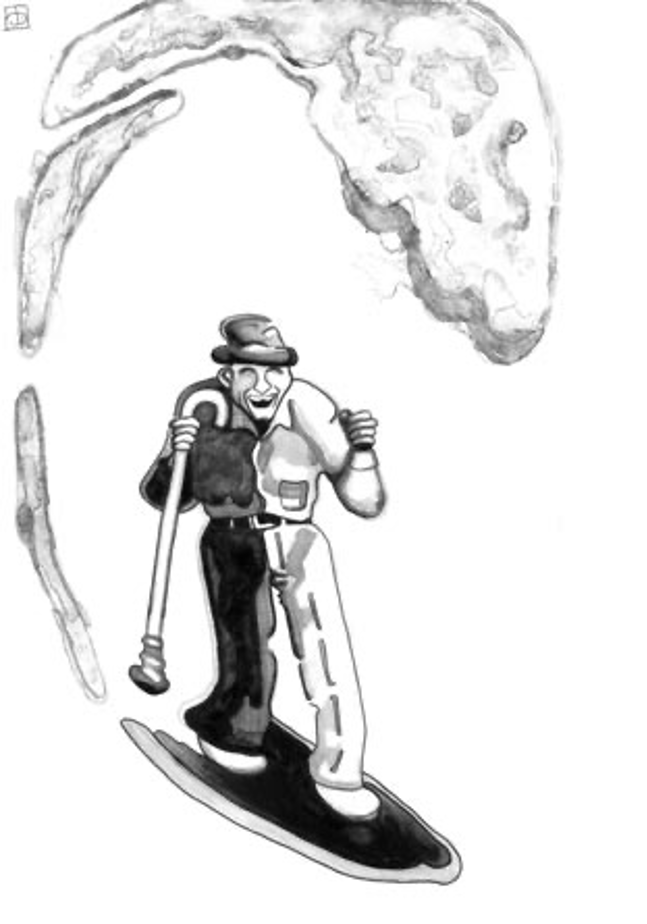
Here They Come
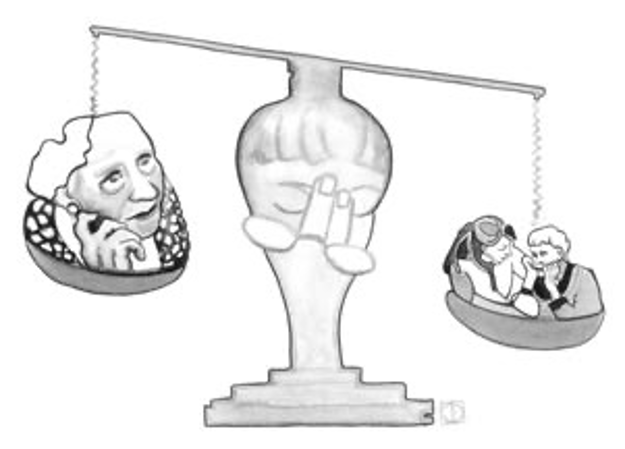
A review of Gerald Hodge's The Geography of Aging: Preparing Communities for the Surge in Seniors
Living in the Promised Land
A review of Fixing the Future: How Canada's Usually Fractious Governments Worked Together to Rescue the Canada Pension Plan, by Bruce Little
Mothers with Alzheimer's
A review of Finding Rosa: A Mother with Alzheimer's, A Daughter in Search of the Past, by Caterina Edwards, and Circling My Mother: A Memoir, by Mary Gordon
Age Brings Knowledge
A review of The Social Behavior of Older Animals, by Anne Innis Dagg
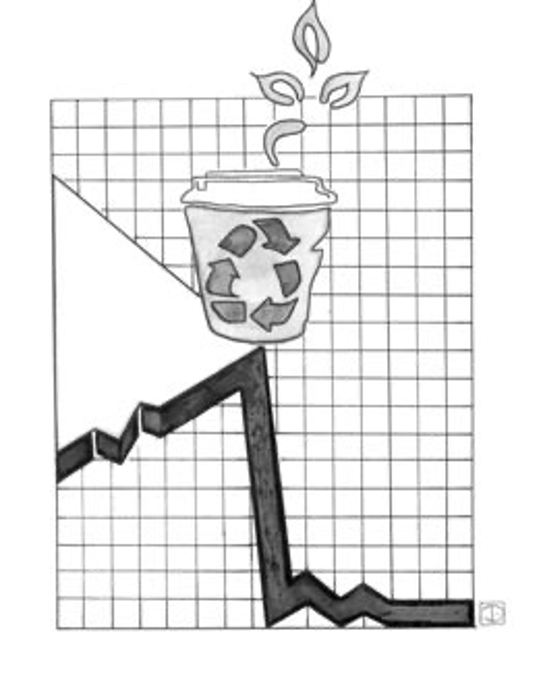
Green-Tinged Hypocrisy
A review of Ecoholic: Your Guide to the Most Environmentally Friendly Information, Products and Services in Canada, by Adria Vasil; David Suzuki's Green Guide, by David Suzuki and David R. Boyd; Almost Green: How I Built an Eco-Shed, Ditched My SUV, Alienated the In-Laws and Changed My Life Forever, by James Glave; The Daily Planet Book of Cool Ideas: Global Warming and What People Are Doing About It, by Jay Ingram; Mom, Will This Chicken Give Me Man Boobs? My Confused, Guilt-Ridden and Stressful Attempt to Raise a Green Family, by Robyn Harding; and Confessions of an Eco-Sinner: Tracking Down the Sources of My Stuff, by Fred Pearce
Cover art and pictures throughout the issue by Diana Juricevic
Diana Juricevic is an artist and international criminal lawyer. Currently living and working in the Netherlands, Diana has illustrated for many years and her portraits have been exhibited at Osgoode Hall and the University of Toronto. She was named by the Women's Executive Network in 2007 as one of the “Top 100 Most Powerful Women in Canada” and profiled in Chatelaine in 2008 as one of “80 Canadian Women to Watch.”
Letters for May 2009
Re: “Realistic Fortune Telling,” by Peter Calamai (May 2009)
“Canada’s chattering class is … scientifically illiterate and largely innumerate.” So claims Peter Calamai toward the end of his stimulating review of Vaclav Smil’s Global Catastrophes and Trends: The Next Fifty Years. While acknowledging that the culture of letters—from which most journalists and decision makers in Canada are descended—and the culture of science have always coexisted uneasily, Calamai argues that what is new and compelling today is how much the major challenges humanity faces demand the rigorous thinking that science inculcates.
How well are Canadians and their governments equipped to bring such rigorous thinking to bear? Consider that only four of the 308 members in the federal Parliament self-report as having professional backgrounds in science. (This excludes health practitioners.) Consider as well that, despite on-and-off appointments of junior ministers for science and technology over the decades, there has been no sustained voice for science in Cabinet. This can only mean that science has not been viewed as central to the nation’s interest.
Peter Calamai is right to be concerned because the decisions we are being challenged to take as a society will increasingly require considerations within the domain of science. This is for the simple reason that science and its linkage through technology are, for better or worse, the principal driving force behind economic, social and environmental change in today’s world.
How then can Canadians become better and more reliably informed about the implications of science for decisions of great public consequence—involving, for example, climate change, pandemic preparedness, food safety or the ethics of the conduct of science itself? The United States has had an institution to turn to for advice on matters like these since 1916, when the National Academy of Sciences began to undertake independent studies by panels of experts of the science that is relevant to public policy. Some 90 years later, in early 2006, the creation of the Council of Canadian Academies has given this country an analogous capacity.
The council is a non-profit private sector corporation that supports studies by panels of experts that serve voluntarily, subject to rules that ensure independence and absence of conflicts of interest. So far, the council—whose founding members include the Royal Society of Canada, the Canadian Academy of Engineering and the Canadian Academy of Health Sciences—has completed eight studies requested by the federal government on a broad range of subjects, including influenza transmission, nanotechnology regulation, groundwater management and business innovation. All of these studies are couched in accessible language and are available on the council’s website—scienceadvice.ca.
This is a start, but it is still a faint voice to inform Canadians and their decision makers on momentous issues of the sort analyzed by Professor Smil. It is past time that Canada equipped itself to have an informed, and therefore influential, voice on the science that is both cause and solution of so many of the challenges and opportunities facing humanity.
Peter Nicholson
Council of Canadian Academies
Ottawa, OntarioResponse to Realistic Fortune Telling
A Response to James Pollock’s ‘Choosing the Best Canadian Poetry’, by Fraser Sutherland (May 2009)
My thanks to Fraser Sutherland for his genial response, but I take issue with three points.
He blames the poor state of poetry criticism in Canada, in part, on the “dismal landscape” of our institutional literary culture—blogs, prizes, journals, workshops, subsidies, public readings, poetry organizations—but I am impatient with this familiar line of complaint. The form the institutions take does not matter. What matters is that well-read, energetic, honest critics—who write well—devote themselves to writing criticism. We are not talking about producing operas here. True, critics need venues, and fortunately they’ve got some. But otherwise, all they need is a bit of time, a few review copies and a laptop. Let our best potential critics stop making excuses and get to work.
I’m more sympathetic when Sutherland blames literary theory, especially post-structuralism, for the decline of evaluative criticism; I refer interested readers to Rónán McDonald’s useful recent book, The Death of the Critic. But let’s not get carried away. Sutherland attacks the supposedly destructive influence of Frye and Atwood, but Frye, besides being a great theorist and interpreter, and therefore extraordinarily helpful to interpretive and evaluative critics, was the finest evaluative critic of Canadian poetry we had in the 1950s. See his reviews in The Bush Garden. As for Atwood, I do not agree that Survival is deplorable. It has nothing to do with evaluative criticism, but as cultural theory it is brilliant. The problem is not that the influence of Frye and Atwood was too strong. It is that, in the last half of the 20th century, no other critic in Canada was strong enough.
Finally, to answer Sutherland’s question about my disappointment with so many of the poets of Atwood’s generation: I am dismayed, in reading Purdy, Newlove and MacEwen, by their poverty of technique. I am with him when he writes that “craftsmanship is no guarantee of … good poetry.” I’ve never heard anyone say it is. But surely it is a prerequisite. Against craftsmanship Sutherland cites Whitman of all poets, that master of rhetoric and free-verse prosody, so he is apparently confusing craftsmanship with traditional formalism. To say my “critical tastes lean toward the formalist” is therefore incorrect; I value technical mastery, whether avant-garde, formalist or otherwise, because it is indispensable to good poetry. Of course, I value other things too—imagination, intelligence, emotion, sensuousness, moral force, spiritual insight, innovation, engagement with tradition—but if the technique is weak, I am just not interested.
James Pollock
Madison, Wisconsin
The LRC welcomes letters. We reserve the right to publish such letters and edit them for length, clarity and accuracy. E-mail editor[at]lrcreview[dot]com.
Online Originals
Lincoln’s Prophet
A review of George Fetherling's Walt Whitman’s Secret: A Novel
Untying the Knot
A review of A History of Marriage by Elizabeth Abbott
The Winter of a Hundred Books
- More Online Originals »