
Nations, like families, tend to see the past through a refracting glow of myth. For Canadians educated before the Trudeau years, the misty lens generally worked to filter out any evidence that Canadians were not, in fact, more respectable—orderly, pious, unassuming and honest—than our crude and noisy neighbour to the south. For later generations, the lens took on a rosier hue: we became, even retroactively, a beacon of tolerance among nations, at least by contrast. It can prove painful to renounce these cherished illusions. A contemporary class of university students, confronted with the unpalatable fact that many affluent Canadians owned slaves well into the 19th century, all but pass through the five stages of mourning.
One of history’s roles is to replace these retroactive distortions with cold, hard fact—and Desmond Morton’s Fight or Pay: Soldiers’ Families in the Great War manages to do considerable damage to both fictions. The historian’s latest work is a study of how the Canadian Patriotic Fund and its successors maintained combatants’ dependants during and after World War I. It will do little to bolster our national sense of self-esteem. In his conclusions, this is how Morton characterizes Canada’s ethos at the time of the war: “In 1914 prevailing ideas reflected a society in which most people were poor, and scarcity, greed, and selfishness were taken for granted.”
The system designed to keep soldiers’ families from want was coldhearted and frugal to the point of miserliness—but it also had to contend with desertion, adultery, bigamy and fraud. No matter which myth the reader subscribes to, Fight or Pay will serve as a healthy corrective.
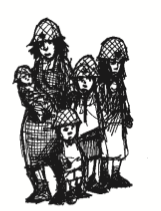
Kevin Sylvester
This is, by implication, not the book Morton had hoped to write. In his preface, he notes a promise he made to himself twelve years ago, while writing When Your Number’s Up: The Canadian Soldier in the First World War. He wanted to produce a companion volume about the women and children those soldiers left behind. But the necessary evidence for such an ambitious project no longer existed. A soldier’s precious letters home were jealously preserved, but the letters he received in return were likely to dissolve in the trenches. Instead, Morton turned to a topic that in other hands might have proved unbearably arid: the legal and bureaucratic mechanisms the government created to keep the home fires burning. It was a sound choice. Fight or Pay makes a surprisingly gripping story of Canadian hypocrisy, selfishness, officiousness and stoical endurance.
Canada was not a prosperous country when it declared war. Sir Robert Borden’s government paid its military volunteers a higher wage than the British enjoyed—a source of considerable friction once the Canadians arrived overseas—and had no desire to add to its expenses by supporting wives and children, too. Colonel Sam Hughes, as minister of militia, officially encouraged only single men to sign up, and demanded written releases from the wives of married recruits. But his own unswerving enthusiasm for war made him reluctant to turn anyone away. Moreover, years of economic depression made the army attractive to the country’s unemployed family men.
The solution devised would have gladdened the heart of George W. Bush. In our current terminology, Ottawa downloaded most of the problem. It agreed to a meager separation allowance, and encouraged enlisting men to assign a portion of their pay to the wives, children or other dependants they left behind. It then channelled authority for any additional support to the Canadian Patriotic Fund, a version of a pre-existing institution created during earlier wars. The fund would be a private institution for raising money and distributing it. The property-owning classes would raise the money (often by forcing employees to donate), and would investigate claims to weed out the undeserving.
It is, obviously, a classic case of having your cake and eating it. The government solemnly assured dependant families that the CPF was not dispensing charity; it claimed to recognize the rights of women and children whose men were sent off to the front. (The CPF played no role in helping military men who remained in Canada.) Its first chairman, Herbert Ames, promised: “It is not a charity or a relief fund that is proposed, but a straight business proposition which I do not doubt will appeal to the patriotism and common sense of our people.” Yet a middle-class female volunteer “visitor” could decide that a soldier’s wife was too extravagant, immoral or affluent to qualify for her alleged rights. Donors had a lingering Victorian horror of rewarding the undeserving poor.
From a fiscal perspective, it no doubt worked: Soldiers could concentrate on the task at hand, freed from worry, without adding to the government’s debts. The country could funnel its patriotism into demonstrably useful channels. As a bonus, the CPF could serve as a force for unity. Organizers solemnly cited contributions from Inuit or Indian donors; fundraising campaigns in Quebec anxiously sought francophone leaders, and even representatives of the “Hebrew” community. (The appeal sometimes failed. Some Quebeckers were more eager to donate money to Ontario’s francophones, recently denied education in their own language by the provincial legislature.) Montreal’s tiny Lebanese community contributed, as did the four Chinese residents of Hedley, British Columbia.
For the CPF’s beneficiaries, however, the solution was far from ideal. The stipends they received were not generous. Moreover, the government had promised them support if their husbands volunteered, but seeking their rights opened them to all the intrusions of local do-gooders. Indeed, for the CPF’s original leader and chief architect, that was one of its great attractions. The investigating visitor could combine his or her snooping with the “alms of good advice.” Ames hoped that the CPF would help Canada’s poor to acquire the frugality, cleanliness and industrious habits that would guarantee future prosperity.
Helen Reid, the tireless backbone of the CPF’s Montreal branch, shared Ames’s hopeful view of the influence of the visitor: “Think what it means to make a better home than it was when the man went away, think what it means to him to come home to find his home cleaner and sweeter. Think what it means to him when the woman says to him: I have been gradually learning to live up to a scale I have not had before; I want to live up to that scale in the future.” (Ms. Reid, as you might have guessed from this happy picture of a working-class husband returning to a suddenly middle-class wife, was unmarried.)
It is instructive, in these days of debate over same-sex marriage, to read of the furor over support for what were then called “unmarried wives.” Reid fumed in print: “We spend millions yearly selecting and breeding pigs, horses, cattle, etc. What kind of men and women of the future will Canada have, if some thought is not given to the conservation of family life and the maintenance of the laws of decency governing the same in Canada.” Reid contended that allowing maintenance to a common-law wife placed decently married women on a lower social footing than multiple wives in polygamous cultures, since a new irregular liaison could supersede an older legitimate one.
Although the information provided by case histories and bureaucratic correspondence is tantalizingly brief, there is enough material here for a dozen novelists and an army of moralists. Among the early casualties of the war one can include John Grant of Sault Ste. Marie. Grant was paralyzed from a work accident in 1902; his wife, a nurse, tended to his needs and took in boarders. In 1915, when she died suddenly, their two sons were overseas. During the months Canada’s military authorities used up debating his right to a separation allowance normally paid to wives, John Grant died of starvation.
That is the ugliest single case in the book, but far from the only horror story. Some of the worst involve the treatment of wounded and disabled veterans. Without understanding of psychological damage, medical review boards tended to see malingering where we would identify post-traumatic stress disorder. The more sensitive and open-minded were ill advised to fight prevailing wisdom. The historian of the Canadian Army Medical Corps was incensed by the misplaced sympathy of civilian doctors: “The grumbler, the malingerer, and the neurotic never failed to find an audience equally neurotic and ready to lend an ear to murmurings and complaint.”
There was debate over a pension for the army’s only quadruple amputee—because he might have been drunk when he was hit by the train that severed all four of his limbs. Not coincidentally, he was an Afro-Canadian.
In many cases, the CPF and the government clearly valued the letter of the law far more than any rational measure of mercy. The families of deserters or imprisoned soldiers automatically lost their benefits. The benefits of a detected bigamist usually reverted in their entirety to his original wife. And if there are few horror stories about children, it could well be because no one bothered to record them. In 1934, a new Ontario Liberal government fired the staff of the Soldiers’ Aid Commission, closed its orphanages and sent off the children to work on farms—having first changed their names so that siblings could never be reunited.
To pile horror on horror, just as the war was ending, with all its attendant miseries, the Spanish influenza epidemic killed almost 50,000 Canadians—close to the 61,000 claimed by combat.
Yet there is humour to be found as well. The history books I studied in school—firmly committed to the myth of Canada the Decorous—omitted the story of Joseph Flavelle, knighted for his success as a munitions manufacturer. Fired by a trip to the European theatre, Flavelle told his discontented sub-contractors: “Send profits to the hell where they belong.” Only weeks later, he was charged with profiteering on the bacon he sold to Canada’s troops.
The social attitudes of the period are another rich lode—so quaint as to seem more ludicrous than offensive. One Toronto CPF volunteer turned sour when she realized the fruits of her charitable labour in supporting soldiers’ wives: “Many women with children, who at first were putting in three or four days a week at patriotic work are now forced to remain at home doing their own housework … I think it is a disgrace …that some women whose brains would be valuable in patriotic work are compelled to give it up because we are fostering a spirit of extravagance and wastefulness among the lower class of women.”
It was a conflict we have yet to resolve. As Morton notes, maternalism was a strong value of the period, to the point where many social workers and feminists believed that children’s lives literally depended on keeping mothers home. One doctor wrote: “When the mother works, the baby dies.” (Canada’s infant mortality rates were shockingly high, and few people had yet recognized the link between illness and unclean water or contaminated air.) So the CPF was meant to keep mothers from the horror of outside work—but only up to a point. Helen Reid was scandalized to learn that the Hamilton branch did not deduct outside earnings from a mother’s allowance. She acknowledged unwillingly theneed to allow up to three days a week of charring or laundry (the donors needed servants), but condemned anything more time-consuming or lucrative.
The glimpses of Canada’s social panorama are invaluable—it becomes easier to understand some of the contemporary distaste for the undeserving poor. The exemplar in this area would have to be Dora Horwood, wife of the unfortunate Fred, a pastry cook. Dora gave birth, three months after her marriage in Britain, to a child who was clearly not Fred’s. They emigrated to Winnipeg and managed to have three more children, although the union was far from ideal. Dora seems to have had some bad habits: her husband complained that she would habitually “enter the Bake shop … and creep behind me while I was working, and kick me several times without me saying or doing anything and the propreator [sic] had to tell her he would send for the Police.” At the end of the war, Fred returned home, gave his wife $25 and disappeared for good.
Certainly there are grounds here for laughter at the Canadian establishment. The iconic feminist Nellie McClung produced a cloying short story about the redemption of a childless wife who squanders her $5 CPF allowance—the local head of the Red Cross weans the wayward wife from her destructive indulgence in good clothes, an active social life and even taxis home from shopping trips. The reformed wife renounces her CPF grant, puts her separation allowance in the bank and finds work as a waitress. She gives up her boyfriend, and presumably her taxi rides to boot.
But under the circumstances, which were atrocious, the CPF did not always do so badly. Its record of fundraising could prompt envy today, even if labour eventually came to resent the contributions that employers forced workers to make. The Grant case, horrific as it was, was a rarity. If Canadians could not thrive under such a stingy and paternalistic scheme, they generally managed to survive. Given the bureaucratic chaos at the beginning of the war, which Morton documents admirably, the CPF achieved miracles of organization in a short time. Unfortunately, due to its miserliness with the lonely and sometimes desperate families it supported, the CPF enjoyed a large and embarrassing surplus at the end of the war, and returning veterans were not amused.
You can find any number of familiar Canadian motifs in this book. New social spending all too often coincided with election campaigns. Bureaucrats, military and civilian, were nefficient, rigid and often self-pitying. And once the war ended, red tape became a cloak for reducing expenses—by restricting pensions to the barest of minimums, no matter how great the need. Yet, in the end, there has been progress. If Canada has failed to achieve anything like universal prosperity or even compassion, it is impossible today to imagine a paralyzed father dying while bureaucrats debate the legalities of his case.
This is a very professional piece of work, covering an area of interest that may seem limited. But Desmond Morton has produced a book that is eminently readable, for anyone with the slightest curiosity about Canada’s past. Its appeal is rooted in his lively writing, in the curiosity that drove his research and the industry that satisfied it—and, despite his consistent scholarly professionalism, an animating dose of healthy and well-merited anger at a government that valued appearance over reality and fiscal caution over humanity.
Suanne Kelman is professor emerita of the School of Journalism at Ryerson University. She is the author of All in the Family: A Cultural History of Family Life (Viking, 1998).
Advertisement

Advertisement